The facilities management industry is undergoing one of its most significant transformations in decades.
For many years, facilities management was primarily focused on maintaining buildings, ensuring compliance, and keeping operations running smoothly. While these responsibilities remain critical, organisations are now expecting much more from their facilities partners.
In 2026, workplace experience has become a strategic priority. Businesses are increasingly recognising that the quality of the workplace directly impacts employee satisfaction, productivity, retention, and overall business performance.
As a result, facilities management providers are evolving from service suppliers into strategic workplace partners.
The Shift from Building Management to People-Centred Workplaces
Today’s employees expect more than just a functional office.
They want workplaces that are welcoming, safe, comfortable, and conducive to collaboration. Organisations are investing heavily in creating environments that encourage employees to return to the office and perform at their best.
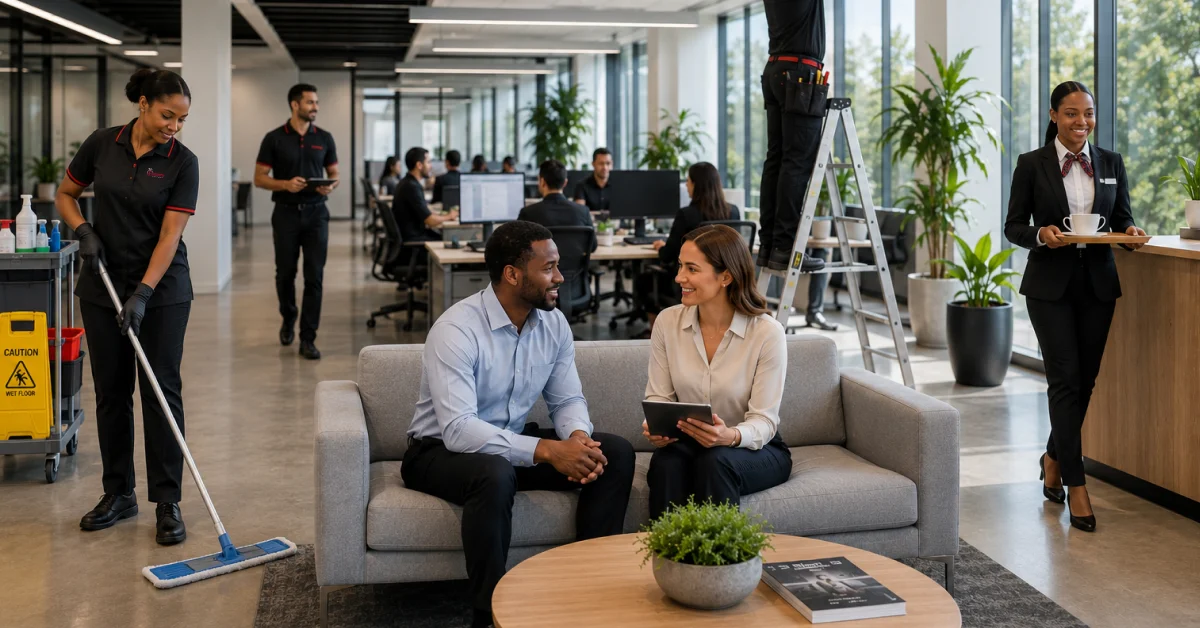
This means facilities management teams are now responsible for much more than maintenance and cleaning. They play a vital role in shaping the daily experience of every employee and visitor who enters a facility.
Key focus areas now include:
- Workplace hospitality
- Employee wellbeing
- Visitor experience
- Hygiene and cleanliness standards
- Workplace comfort
- Sustainability initiatives
- Smart building technologies
Businesses that prioritise these elements are seeing measurable improvements in employee engagement and workplace satisfaction.
Hybrid Work Continues to Reshape Facilities Management
The rise of hybrid working models continues to influence how workplaces are designed and managed.
Many organisations are reducing underutilised spaces while investing in collaborative environments that support team interaction and innovation.
Facilities managers are increasingly required to:
- Optimise space utilisation
- Support flexible work environments
- Manage fluctuating occupancy levels
- Improve workplace efficiency
- Deliver seamless employee experiences
The ability to adapt facilities services to changing workplace demands has become a major competitive advantage.
Employee Wellbeing is Driving New Workplace Standards
Employee wellbeing has moved from being a Human Resources initiative to a business-wide priority.
Modern workplaces are being designed with physical, mental, and emotional wellbeing in mind. From cleaner environments and improved air quality to healthier workplace amenities, organisations are recognising the connection between wellbeing and productivity.
Facilities management providers play a crucial role by delivering:
- High hygiene standards
- Safe working environments
- Comfortable workplace conditions
- Professional support services
- Enhanced workplace experiences
Organisations that invest in employee wellbeing often experience lower absenteeism, improved morale, and stronger employee retention.
Technology is Transforming Facilities Management
Technology continues to revolutionise how facilities are managed.
Smart sensors, data analytics, automation, and integrated workplace management systems are helping organisations make more informed decisions while improving operational efficiency.
Emerging technologies are enabling facilities teams to:
- Monitor building performance in real time
- Predict maintenance requirements
- Reduce operational costs
- Improve energy efficiency
- Enhance service delivery
The use of workplace data is becoming essential for organisations seeking to create more efficient and responsive environments.
Sustainability Remains a Business Priority
Environmental responsibility is no longer optional.
Many organisations are actively pursuing sustainability targets and looking for facilities partners who can support these goals.
Facilities management teams are increasingly contributing through:
- Energy efficiency programmes
- Waste reduction initiatives
- Sustainable cleaning practices
- Water conservation measures
- Responsible procurement strategies
Businesses that successfully integrate sustainability into their workplace operations not only reduce costs but also strengthen their reputation among employees, customers, and stakeholders.
What Organisations Should Expect in the Next Five Years
Looking ahead, facilities management will become even more integrated with business strategy.
The most successful organisations will be those that view workplace services as an investment rather than an operational expense.
Future workplace strategies will focus on:
- Experience-driven workplaces
- Employee-centred environments
- Smart building technology
- Sustainability leadership
- Data-informed decision-making
- Flexible service delivery models
Facilities management providers that can combine operational excellence with workplace experience expertise will become invaluable partners in helping organisations achieve their business objectives.
Final Thoughts
The facilities management industry is entering a new era.
Success is no longer measured solely by how effectively buildings are maintained, but by how well workplaces support the people who use them. Organisations that prioritise workplace experience, employee wellbeing, sustainability, and innovation will be better positioned to attract talent, improve productivity, and remain competitive in an evolving business landscape.
As workplace expectations continue to evolve, facilities management will play an increasingly important role in shaping the future of work. Companies that embrace this shift today will be best prepared for tomorrow. Fedserv’s focus on integrated facilities management, workplace support services, and operational excellence positions it well to help organisations navigate these changing workplace demands.