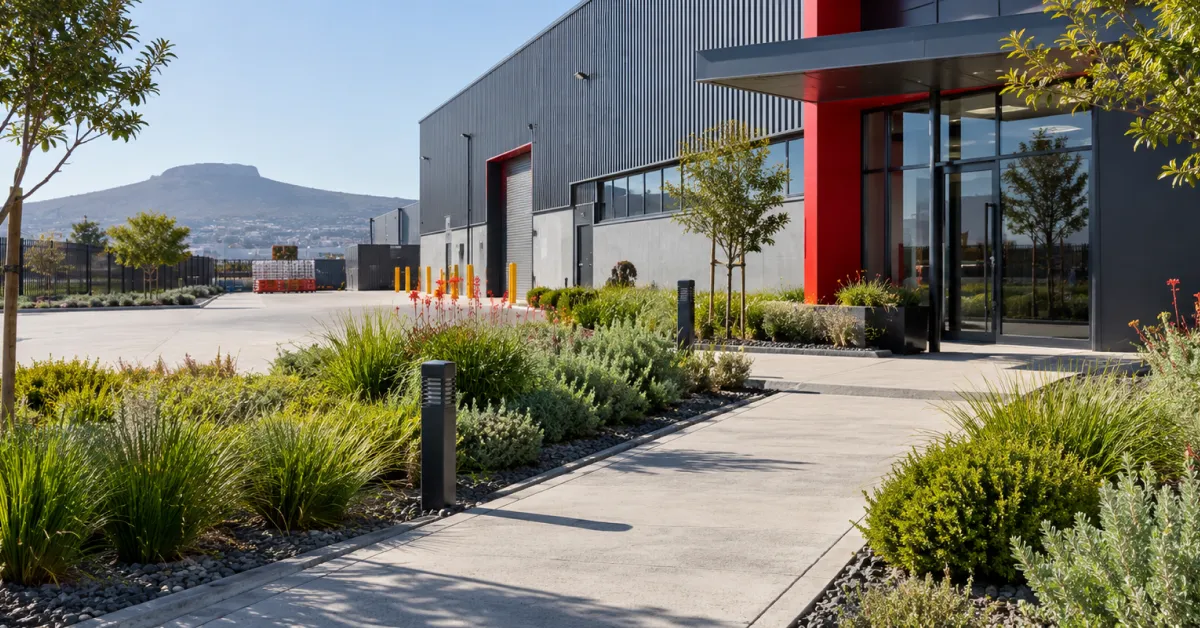
The first part of an industrial site that most people see is not the production floor. It is the route from the entrance to the place where they need to be.
Employees walk from parking areas to buildings. Visitors look for reception. Deliveries move through designated routes. Along the way, outdoor spaces shape how easily people find their way around and how the site presents itself.
That is why landscaping for industrial sites deserves more thought than simply deciding where to put a lawn or a row of shrubs. A good landscape must suit the way the site works.
Start with How People Use the Space
A planting bed may look attractive on a drawing. If it blocks a sightline at a busy entrance or narrows a frequently used walkway, it will soon become a problem.
Before choosing plants, it helps to look at the site from the perspective of the people who use it every day. Where do employees enter and take breaks? Which routes must stay clear? Where do vehicles and pedestrians meet? Which outdoor areas receive heavy use, and which are mainly seen from a distance?
These questions help turn landscaping into a practical site plan. Clear pathways, sensible planting positions and well-kept entrances can make a large property feel easier to navigate and more welcoming.
Choose Plants for the Place They Will Grow
Industrial and commercial properties rarely offer identical growing conditions. One area may receive strong sun throughout the day, while another sits in shade beside a building. Soil, wind exposure and available water can also vary across the same site.
A plant that looks impressive when installed may struggle if it does not suit its position. Repeated replacement then adds work and cost without improving the space.
Thoughtful landscaping starts with suitable plant selection and a realistic view of ongoing care. It also considers how large plants will grow, rather than judging them only by how they look on planting day.
Make Outdoor Areas Worth Using
Not every part of an industrial site needs to become a garden. Sometimes the most useful improvement is modest: a tidy entrance, a clearly defined walkway or a shaded outdoor area where people can pause during a break.
The aim is to give each space a purpose. An entrance should be easy to approach. A rest area should be comfortable to use. Planting near shared facilities should complement the building without getting in the way of access or maintenance.
When outdoor areas are designed around real routines, they become part of a better daily site experience.
Plan for Maintenance from Day One
A landscape is never finished when the planting is complete. Grass grows, shrubs spread and seasonal conditions change. If the original design depends on more water, labour or access than the site can reasonably provide, its appearance will be difficult to maintain.
A practical plan should account for:
- The site’s climate and growing conditions
- Water availability and maintenance needs
- Safe access for grounds teams
- Clear pedestrian and vehicle routes
- The mature size of trees and shrubs
- How the space should look throughout the year
These details may be less visible than a new planting scheme, but they determine whether the result continues to work.
Build Grounds That Fit the Site
Fedserv’s Landscaping Services cover design, planting, lawn care and seasonal upkeep for commercial and operational environments. The starting point is the site itself: its layout, the people moving through it and the level of care the grounds will need.
Well-planned landscaping can make outdoor areas attractive without losing sight of their everyday purpose.
But planning and planting are only the beginning. In Part 2, we look at the horticultural care that helps a landscape stay healthy, usable and presentable as it grows.
Talk to Fedserv About Your Outdoor Spaces
Whether you want to improve an entrance, refresh existing grounds or plan a more useful outdoor area, Fedserv can help develop a landscaping approach suited to your property. Contact our team to discuss your site’s needs.